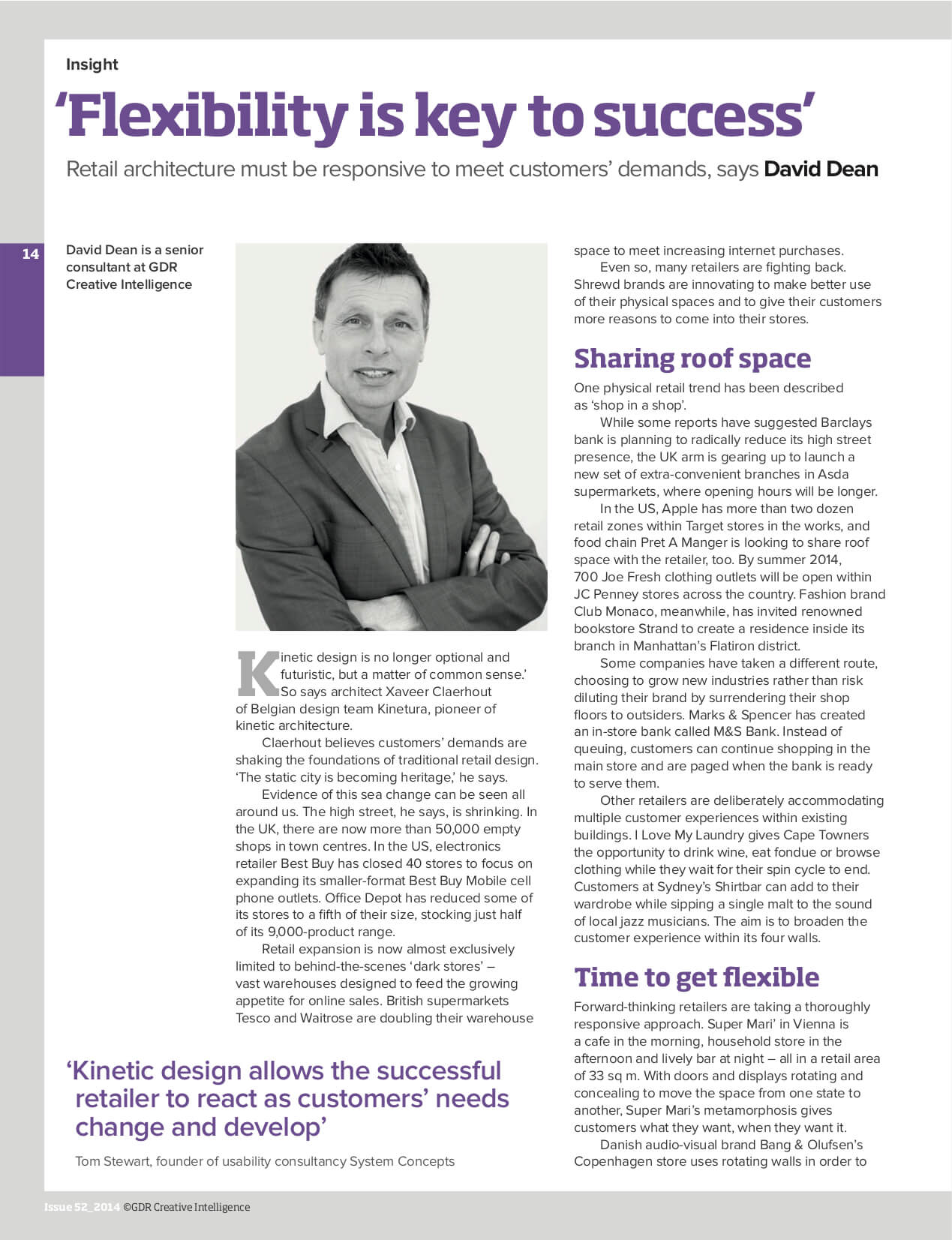
Article by Colin Gentry, innovation researcher for GDR- 2014
“‘Kinetic design is no longer optional and futuristic, but a matter of common sense’
So says architect Xaveer Claerhout of Belgian design team Kinetura, pioneer of kinetic architecture.
Claerhout believes customers’ demands are shaking the foundations of traditional retail design. ‘The static city is becoming heritage, he says.
Evidence of this sea change can be seen all around us. The high street, he says, is shrinking. In the UK, there are now more than 50,000 empty shops in town centres. In the US, electronics retailer Best Buy has closed 40 stores to focus on expanding its smaller-format Best Buy Mobile cell phone outlets. Office Depot has reduced some of its stores to a fifth of their size, stocking just half of its 9,000-product range.
Retail expansion is now almost exclusively limited to behind-the-scenes ‘dark stores’ – vast warehouses designed to feed the growing appetite for online sales. British supermarkets Tesco and Waitrose are doubling their warehouse ‘Kinetic design allows the successful retailer to react as customers’ needs change and develop’ Tom Stewart, founder of usability consultancy System Concepts space to meet increasing internet purchases.
Even so, many retailers are fighting back. Shrewd brands are innovating to make better use of their physical spaces and to give their customers more reasons to come into their stores. “